Beyond Sustainability: Growing the Permaculture Movement
IPC16 Online Conference
6 – 8th November 2026
IPC16 Online Convergence
11 – 15th November 2026
IPC 16 Convergence – Strategic Conversations for the Permaculture Movement
11 – 15th November
14:00 to 19:00 UTC
Wednesday – 11th November 2026
Welcome, Connect & Get Oriented
14:00 – 16:00 UTC

This opening session brings everyone together to begin our five-day journey. We’ll meet the people, organisations and networks taking part, introduce the facilitators and sessions ahead, and explore why we are gathering. It is a space to get oriented, make connections and begin seeing where we can coordinate, collaborate and weave stronger relationships across the permaculture network.
Conflict & Succession Planning within the permaculture movement
17:00 – 19:00 UTC

Aimee Fenech
Alejandra Garcia
Since the beginning of humanity we have been in conflict both within and without. Each of us navigate conflict as part of being human and within all our ecosystems so too in the permaculture movement at all levels. So what are we doing about it and what can we do better?
Similarly whilst succession is one to the main considerations when working on permaculture design we often see there is not enough of this is present in the organisations, associations and networks. Don’t agree? Excellent! Come and share what your organisation is doing so that we can learn from each others experiences around succession planning and implementation.
Thursday – 12th November 2026
How to amplify our voices for Permaculture Organisations, Associations and Networks
14:00 – 16:00 UTC

Charlie Wilson
The world is loud and busy and we are competing for attention with literally everything else! We all want Permaculture to become more accessible, more mainstream and reach more people so that we can bring people closer to adopt and practicing the Permaculture Ethics and Design. So how do we, as a movement, find our voice and how can we amplify it so that we can reach more people? In this strategic conversation we will find out what’s already being done, what we can do better and put down some actions we can take now to become more effective in our communications.
Funding Permaculture
17:00 – 19:00 UTC

Hans Ryding
Join this session if you are directly involved in fundraising for your permaculture association, organisation, project and network and would like to share and learn how others are doing it and be inspired and motivated to bring in more funding for the permaculture movement.
We are also keen for funders who fund permaculture to join this strategic conversation and bring their views and experience to the group.
In this session we will explore what your organisations are already doing, where the challenges and opportunities lie and where the gaps are.
We see great potential in you as the permaculture movement actors, shakers and movers to bring more opportunities for all to the table.
Friday – 13th November 2026
Beyond the PDC – How are we supporting students and members of communities to step into Permaculture & Permaculture Aligned Ethical Livelihoods?
14:00 – 16:00 UTC

Aimee Fenech
In order to address the greatest challenges of our time we need people with varied interests and skills at every section of society. We need permaculture politicians, policy makers, lawyers, engineers, developers, designers, community leaders, teachers, entrepreneurs, city planners, councillors etc.
Many permaculture students struggle to identify their next steps after a permaculture design certificate course. They are often unsure about the real life application of the ethics, principles and design frameworks within the reality of having to work to financially support themselves. This is especially so for students who do not have access to land or are not interested in land-based permaculture application and practice and do not want to become land stewards or permaculture teachers.
The parts which the Permaculture Design Certificate curricula covers non-land based permaculture design and applied practice are small percentages of the whole course material and time dedicated to teaching this. There is little to no support after the course to help students move from theory into practice. Is this true?Join us for a strategic conversation to contribute to and learn by sharing what is already in place, what we can do better and what actions we can take now to better support our diverse community.
Disaster Relief Initiative (DRI)
17:00 – 19:00 UTC
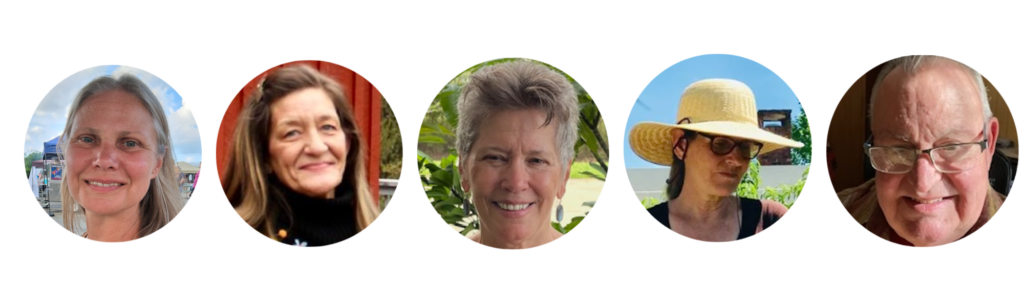
Koreen Brennan, Lee Barnes, Lesley Moore, Elizabeth Lynch, Suzanne Bonefas
The Disaster Resilience Initiative empowers individuals and communities to prepare for, mitigate, and recover from climate-related disasters using proven permaculture and regenerative practices. Join us for an engaging session where we explore practical, frontline approaches to building long-term resilience and showcase our hands-on Guides and Toolkits designed to help you take action in your region.
The Disaster Resilience Initiative was conceived in the aftermath of the devastation of Hurricane Helene, when Lee R Barnes, alongside a founding group of members from North Carolina, Florida, and Houston who had personally experienced severe hurricane events, began compiling vital resources.
The initiative has since evolved from a resource-gathering effort into a collaborative project focused on co-creation, organizing, and sharing the experience and wisdom of front-line groups and regenerative designers.
The DRI provides a broad scope of support through our practical tools, including guides and toolkits covering major risk areas like Fire, Flood, and Extreme Winter Weather. The DRI is a joint, inclusive effort of the Association for Regenerative Culture (ARC), Permaculture Institute of North America (PINA), and WeRegenerate.Earth. Beta versions of several of these guides are available for online reading and download from our website: https://pcx.earth/disaster .
Our work is grounded in the core Permaculture Ethics: Earth Care, People Care, and Future Care—acknowledging that fully embodying these values is an ongoing practice as we transition toward the world we envision.
Saturday – 14th November 2026
Building Networks and work and last
14:00 – 16:00 UTC

Andreas Pohl
In Romania we have a fragmented landscape of Permaculture projects, each working on its own goals, little cooperation, and sometimes even a sense of competition. How can we build a network of trust and cooperation?
Last winter we set out on a journey, exploring what might be possible. Because, after all, we do share a set of ethics and principles, and only together we can be stronger – no matter if in Romania or elsewhere. In this session we want to create a space to share experiences with building multi-stakeholder permaculture networks, especially but not exclusively national networks. What worked in your context, what did not?
Engaging children in permaculture
17:00 – 19:00 UTC
Lusi Alderslowe
Where permaculture is about creating a permanent culture, who is currently engaging children in that process? How do we create a culture in which children are integrated in wholistic education and community?
Sunday – 15th November 2026
Ethical software in the Permaculture movement
14:00 – 16:00 UTC

Alejandra Garcia
Many of us are spending more and more time of our waking hours in front of our digital devices as much as 8 – 11 hours per day . How many hours per day do you use a digital device? How much do you know about your devices and the apps that you use on a daily basis? How much do you know about the companies that supply them?
As Permaculture aligned organisations, associations and networks how are we deciding what technology to use and why? Are we leaning towards what we already know, instead of a permaculture-design approach?
Well, I must say I’ve been hearing this conversation arising more and more. In different groups, family dinners, friends gatherings. The curiosity is growing, and the Digital Circle would like to host a space where you, the primary actors in the Permaculture movement, could share first your thoughts, challenges, and actions that can bring the movement closer to ethical digital tools that reflect our permaculture values.
Wrapping Up IPC16 — What’s Next?
17:00 – 19:00 UTC
Five days. Ten sessions. Twenty hours of conversations across the permaculture network.
In our final session, we’ll look back at the people, perspectives, connections and ideas that shaped the week — and then turn our attention forward.
Together, we will reflect on what we have heard and learned, identify what feels important to carry forward, and explore what comes next.
Subscribe to the IPC16 online newsletter
We’d love to keep in touch with all the attendees, speakers and facilitators joining the IPC16 online and on the ground. We’ll share news, upcoming events and opportunities.